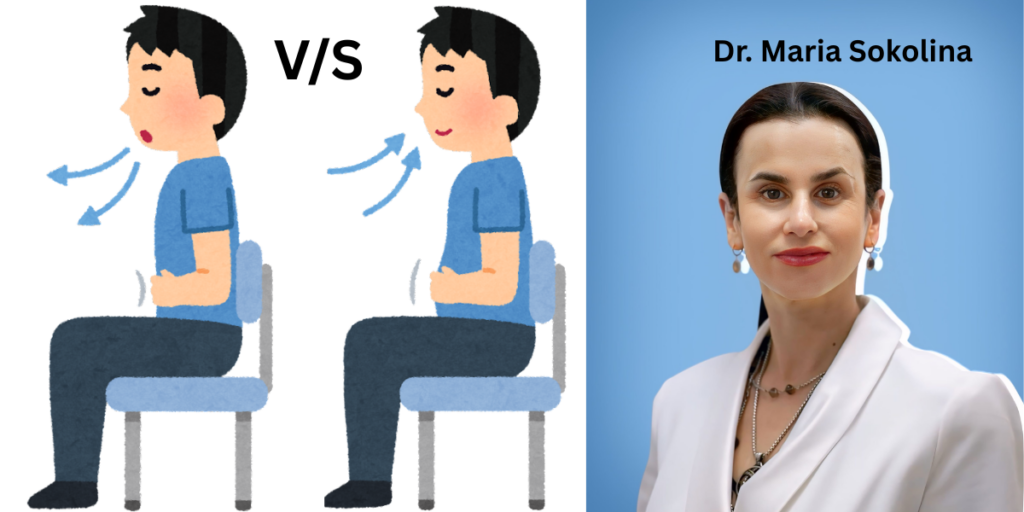
Breathing feels automatic, yet the way you breathe can shape your oral health, sleep, and even facial development over time. Many people do not realize they spend hours each day breathing through the mouth, especially at night. That habit can leave clues your dentist may spot long before you connect the dots yourself.
This guide breaks down mouth breathing vs. nasal breathing in clear, practical terms and explains why Dr. Maria Sokolina, DDS, looks closely at breathing patterns as part of comprehen sive dental care in Clifton.
Why Nasal Breathing Is Essential

Nasal breathing supports the airway’s built-in defenses and helps the body regulate stress and sleep. When nasal breathing becomes the norm, the mouth, tongue, and jaw tend to function in a healthier pattern.
Natural Filtration and Air Conditioning
One of the main benefits of nasal breathing is that your nose functions as a filter, capturing allergens, dust, and debris before air enters the lungs. Additionally, the nasal passages warm and humidify the inhaled air, thereby reducing airway inflammation and throat irritation. This conditioning effect promotes more consistent breathing and fewer dryness-related awakenings during the night. Consistent nasal airflow can eventually help people breathe more comfortably and calmly during the day and at night.
Nitric Oxide and Oxygen Efficiency
Breathing through the nose supports nitric oxide release in the nasal passages, which is closely tied to efficient oxygen use and circulation. With steady nasal breathing, oxygen exchange can feel smoother during rest and light activity, and the body may maintain a better respiratory rhythm. Nitric oxide also plays an antimicrobial role, which supports respiratory health as seasonal bugs circulate. This is one reason many clinicians encourage nasal breathing habits when possible.
Nervous System Regulation and Sleep
Nasal breathing tends to support the parasympathetic response, the body’s calm, recovery-oriented state. When breathing is slower and regulated through the nose, stress signals often reduce, and the body can settle into sleep more easily. People who shift toward nasal breathing often notice fewer nighttime mouth-dry episodes and a steadier sense of rest. Sleep quality depends on many factors, yet breathing style can be a surprisingly influential piece of the puzzle.
Skeletal and Dental Development
Healthy breathing habits in children often correlate with proper tongue posture, where the tongue rests against the palate. This posture can support natural upper-jaw development and help create space for erupting teeth. When comparing mouth breathing vs nasal breathing, one major difference is how each pattern influences the mouth’s resting posture over years. Long-term, stable breathing habits can support facial balance, dental alignment, and bite stability as growth progresses.
The Hidden Dangers of Mouth Breathing

Mouth breathing can feel harmless, especially if it started during allergies or a cold, yet chronic mouth breathing often changes the oral environment. In our area, mouth breathing Clifton families talk about often shows up as dry mouth, snoring, or restless sleep.
Oral Health Consequences
When someone breathes through the mouth, saliva evaporates faster, leading to dry mouth and reduced natural protection. Saliva helps neutralize acids, wash away food particles, and buffer bacteria, so reduced saliva can raise the risk of cavities and gum irritation. Persistent dryness can also contribute to bad breath and inflamed tissues, making routine cleanings and restorations harder to maintain comfortably. A targeted mouth breathing evaluation can help connect symptoms like frequent cavities or morning dryness to the underlying breathing pattern.
Sleep-Disordered Breathing
Mouth breathing during sleep can contribute to snoring and may be associated with airway collapse in susceptible individuals. It is also frequently discussed alongside obstructive sleep apnea, where breathing repeatedly pauses or becomes shallow overnight. Because dental teams regularly examine the mouth, jaw, and airway-related anatomy, dental sleep assessments can play a valuable role in spotting red flags early. If concerns arise, collaboration with a sleep physician may be recommended to confirm diagnosis and guide care.
Facial and Skeletal Changes in Children
Children’s habitual mouth breathing might affect how their palate and jaws grow over time. Some kids acquire a recessed jaw and a thinner palate, which can have an impact on airway space and bite alignment. In addition, persistent mouth-breathing behaviors may be linked to an elongated facial look, frequently referred to as “long face syndrome.” While growth is still flexible, families can address underlying problems with the use of early screening and a careful mouth-breathing assessment.
Cognitive and Behavioral Effects
Poor sleep and inconsistent oxygenation can affect mood, energy, and attention, especially in children. Families dealing with mouth-breathing Clifton concerns sometimes report daytime fatigue, irritability, or trouble focusing at school. These symptoms can overlap with attention challenges, so breathing and sleep should be part of a wider health conversation. When sleep becomes deeper and steadier, many people notice improvements in daily stamina and concentration.
Mouth Breathing vs. Nasal Breathing—Questions We Hear Most
Patients frequently ask direct, practical questions about breathing habits and what is normal. At our dentist Clifton office, we focus on education first, then recommend next steps based on each person’s anatomy and symptoms.
Which Is Healthier—Mouth Breathing or Nasal Breathing?
For most people, nasal breathing is the healthiest default because it supports filtration, humidity, and efficient airflow. Mouth breathing can happen temporarily during intense exercise or when nasal passages are blocked, like during a cold. The concern starts when mouth breathing becomes the everyday pattern, especially at night. Understanding your baseline is a good first step in evaluating mouth breathing vs. nasal breathing for your health.
Why Is Breathing Through the Nose So Important?
By lowering dry mouth and promoting better salivary function, regular nasal breathing protects teeth and gums. It also improves airway control while you sleep, which may affect how rested you feel in the morning. Nasal breathing can gradually promote better tongue alignment and balance of the oral muscles. It becomes a fundamental habit that promotes overall wellness for many people.
Why Do Healthcare Providers Discourage Mouth Breathing?
Prolonged mouth breathing is associated with gum irritation, dry mouth, increased risk of cavities, and disturbed sleep. It may have an impact on a child’s bite alignment and facial growth, which may complicate future orthodontic requirements. Providers frequently stress treating the cause of mouth breathing, such as congestion, swollen tissues, or structural constraints, when contrasting mouth breathing with nasal breathing. In most cases, treating the root problem is more successful than relying solely on willpower to break a pattern.
Does Breathing Style Affect Long-Term Health?
Breathing technique can impact sleep quality, oxygen efficiency, and the body’s response to stress. Chronic inflammation and inadequate sleep can influence long-term health indicators, mood, and energy levels during the day. The entire extent is still being investigated, but clinical experience regularly demonstrates that better breathing practices are frequently associated with better sleep and increased oral comfort. A systematic discussion regarding mouth versus nasal breathing might help you determine what to do if you think your breathing pattern is impacting your
Dr. Maria Sokolina’s Approach to Identifying and Treating Mouth Breathing

Breathing patterns are rarely a single-issue problem, so care works best when it is thorough and personalized. As an airway dentist Clifton patients can turn to for airway-aware care, Dr. Maria Sokolina integrates screening, education, and stepwise solutions.
Comprehensive Screening and Evaluation
During exams, we look for signs that point to mouth breathing, including tissue dryness, wear patterns, tongue posture, and airway-related anatomy. We also ask questions about snoring, morning headaches, fatigue, and frequent nighttime waking. Contributing factors may include a narrow palate, nasal obstruction, enlarged tissues, or jaw position. When appropriate, we recommend a mouth-breathing evaluation so the plan matches the true cause rather than treating surface symptoms.
Myofunctional Therapy
Retraining the tongue, lips, and cheek muscles to promote better resting posture is the main goal of myofunctional therapy. It can enhance nasal breathing by reinforcing the right swallow pattern, lip seal, and tongue placement against the palate. When necessary, therapy is combined with dental or medical care under the direction of qualified professionals. It becomes the missing piece that makes new breathing patterns feel natural for many patients.
Orthodontic and Structural Solutions
When anatomy limits nasal airflow, orthodontic options may support improved function by addressing arch shape and spacing. Expanders and aligners can help widen the palate and create room, which may support airway function in suitable cases. We also consider how bite relationships influence tongue space and resting posture, especially for children in growth phases. For adults, Invisalign can support alignment and function goals while improving the smile, and your airway dentist, Clifton, and his team can discuss whether structural changes may help support breathing.
Oral Appliance Therapy for Sleep
For patients with snoring or sleep-disordered breathing concerns, a custom oral appliance may help hold the jaw in a position that supports an open airway during sleep. These devices are typically worn at night and can be an option when medically appropriate and properly fitted. When symptoms suggest deeper sleep issues, dental sleep assessments can help identify risk factors and support referrals for medical evaluation. Better airway stability at night often supports a return to calmer nasal airflow and improved rest.
Supporting Healthier Breathing Starts with the Right Dental Care
A healthier breathing pattern often begins with awareness, then moves into practical support based on your needs. Partnering with a dentist who looks at airway health can clarify why symptoms are happening and what options exist.
When to Schedule an Evaluation
If you wake up with dry mouth, snore regularly, feel tired despite enough hours in bed, or notice frequent cavities, your breathing pattern may be part of the story. For children, signs can include open-mouth posture, noisy sleep, chronic congestion, or concerns about facial growth and bite. A focused mouth breathing evaluation can help identify contributors and guide next steps that fit your age, anatomy, and goals. Early attention often supports simpler, more effective solutions.
Visit Harmony Dental Arts in Clifton.
If you have been searching for a dentist near me who takes a whole-health view, Harmony Dental Arts in Clifton is here to help. Our team supports patients who want an experienced family dentist near me and those looking for airway-focused care that connects oral health with sleep and breathing. If you have typed “dental clinic near me,” “dental office near me,” or “best dentist near me” while trying to find answers, we invite you to schedule a visit with Dr. Maria Sokolina, DDS. For families managing mouth-breathing Clifton concerns or adults worried about sleep quality, a thoughtful evaluation can bring clarity and a plan.
If you suspect your breathing pattern is affecting your teeth, sleep, or your child’s development, book an appointment with Harmony Dental Arts in Clifton for a comprehensive evaluation and personalized guidance.