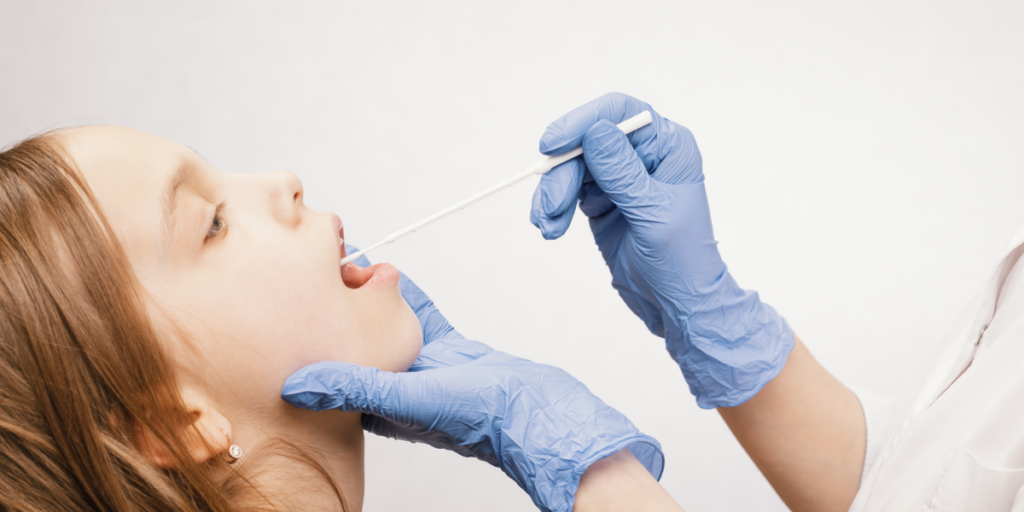
Most dental problems don’t begin with pain. Or they start quietly, with bacterial shifts, inflammation, acidity, dry mouth, or microbiome imbalance that you can’t see in the mirror. For patients looking for a saliva testing doctor near Clifton, it’s about more than just collecting a sample. It is important to know what your mouth can tell us before problems are harder to treat. Harmony Dental Arts uses non-invasive saliva testing to help identify harmful oral bacteria, cavity risk, inflammation patterns, oral pH concerns, dry mouth indicators, and oral microbiome balance, and then uses those findings to support a personalized care plan.
Quick Answer: What Can a Dental Saliva Test Reveal?
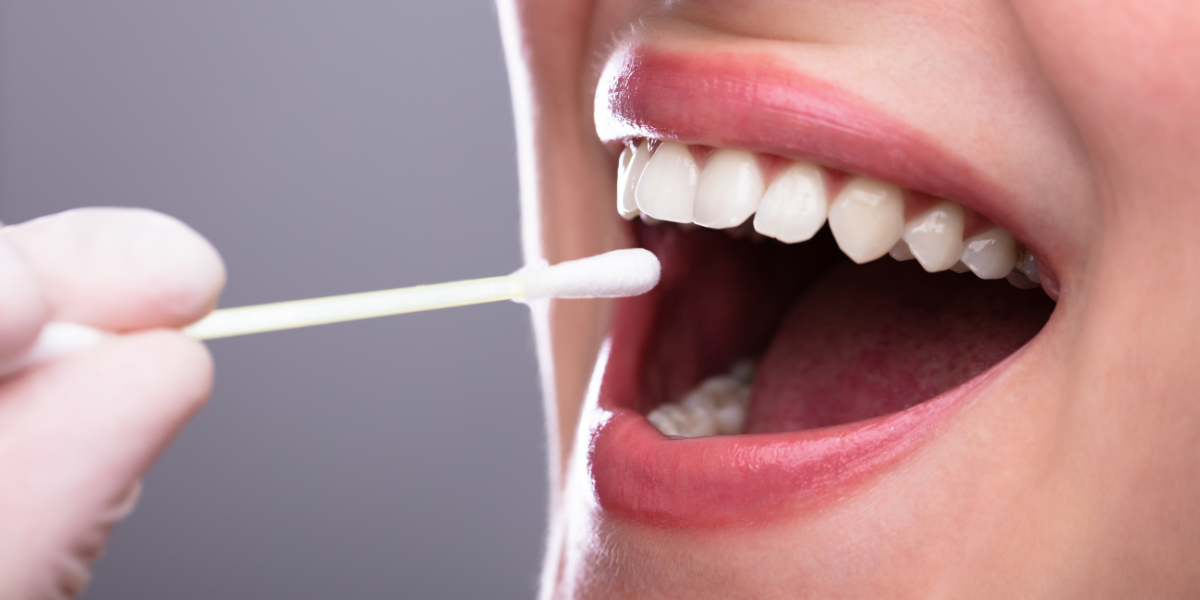
A dental saliva test can help identify harmful oral bacteria, cavity-risk indicators, inflammation patterns, oral pH imbalance, dry mouth concerns, bad breath contributors, and the overall balance of the oral microbiome. Harmony Dental Arts describes its advanced saliva testing in Clifton as a way to assess oral bacteria and gum health, with testing performed through a lab-analyzed process.
Key takeaway: Saliva testing does not replace an oral exam. It adds another layer of information. That distinction matters. A visual exam may show bleeding gums or recurring decay, but saliva testing can help explain why those issues may be happening.
Why Saliva Matters More Than Most Patients Realize
Saliva is treated like background noise a lot. In fact, it helps to remove food particles, helps in swallowing, protects tooth surfaces, and gives minerals like calcium and phosphate, which keep teeth strong. Saliva also contains substances that fight disease and help protect against cavities and infections, the ADA says. Reduced saliva flow leaves the mouth less protected. Dry mouth can raise your risk of tooth decay, thrush, gum irritation, bad breath, and pain. Your mouth is an ecosystem. Teeth, gums, plaque, saliva, bacteria, diet, medications, and immune response all interact. Dry mouth, bad breath, bleeding gums, or recurrent decay during oral exams in Clifton can be signs of a need for a more thorough examination.
What a Regular Dental Exam Can See, and What It May Miss
A regular dental exam is still the foundation of care. It can evaluate teeth, gums, restorations, bite, plaque, tartar, soft tissues, X-rays, pocket depths, and visible signs of decay or inflammation. But a standard exam may not show the specific bacterial profile behind recurring gum problems, bad breath, cavities, or inflammation.
| A regular exam checks | Saliva testing adds |
| Visible decay | Bacterial balance |
| Gum bleeding | Harmful oral pathogens |
| Tartar and plaque | Cavity-risk signals |
| Pocket depths | Oral pH patterns |
| X-ray findings | Dry mouth indicators |
| Oral tissue changes | Microbiome balance |
Two patients may both have bleeding gums. One may have inflammation driven mainly by tartar buildup. Another may have a high-risk microbial pattern that needs closer monitoring. Visually, the symptoms can look similar. Biologically, they may not be the same.
Schedule Your Visit with a Trusted Dental Team
Taking the next step toward better oral health starts with a simple conversation. Our experienced team is ready to answer your questions and help you plan your treatment with confidence.
What Harmony Dental Arts Checks With Saliva Testing
- Saliva testing is a tool for detecting harmful oral bacteria early and creating a personalized plan for teeth, gums, and overall oral health, according to Harmony Dental Arts. The saliva testing page emphasizes in-office sample collection, specialized laboratory testing, and recommendations based on the results.
Key areas in report style are:
- Bad bacteria* Risk of tooth decay
- Score of inflammation.
- Balances oral pH
- Symptoms of dry mouth
- Balancing microbiome
Harmful Bacteria Connected to Gum Problems
There are certain bacteria that cause gum infections, bleeding gums, periodontal problems, and recurring inflammation. If your gums keep inflaming themselves after cleanings, the question isn’t just about plaque. Maybe a better question is, which microbial patterns are contributing?
Saliva testing can be the clarifying point of the discussion.
Cavity Risk, Acidity, and Enamel Stress
Cavities are affected by bacteria, acid production, sugar intake, saliva flow, oral pH, enamel strength, and home-care practices. Even if a patient brushes regularly, decay can occur if the oral environment remains acidic or if there is low protection by saliva. At Harmony Dental Arts, saliva testing includes cavity risk and oral pH balance. This provides the dentist with more perspective in developing a prevention plan.
Bad Breath, Dry Mouth, and Microbiome Balance
Chronic bad breath can be linked to bacteria, dry mouth, gum disease, tongue coating, diet, or inflammation. Guessing rarely helps. This is where oral microbiome analysis in Clifton can help patients understand whether symptoms may be connected to bacterial imbalance, reduced saliva protection, or another dental concern that needs evaluation.
Why This Approach Is Different
Most patients expect a dental visit to include cleaning, X-rays, and a visual exam. Saliva testing adds a data-guided layer. The difference is not the saliva sample alone. The difference is how the results are interpreted alongside your dental and oral exam, symptoms, gum health, cavity history, medications, and prevention goals.
Who Should Consider a Deeper Saliva-Based Check?
Saliva testing may be worth discussing if you have:
- Recurring gum bleeding
- Cavities that keep forming despite brushing
- Bad breath that does not improve with routine hygiene
- Dry mouth
- Dental implants
- A history of gum disease
- A strong interest in prevention
- Concerns about oral bacteria
Patients looking for a saliva testing doctor near Clifton are often trying to understand recurring oral health problems that have not been fully explained by routine visits alone.
What Happens During the Saliva Testing Appointment?
It’s an easy and comfortable process.
1. Book a consultation or dental appointment.
2. Symptoms, dental history, gum health, cavity patterns, dry mouth, bad breath, or implant issues.
3. Oral examination on a clinical basis.
4. Give a small saliva sample at the office.
5. The sample is sent to the laboratory for testing.
6. The results are analyzed and used for personalized recommendations.
Harmony Dental Arts says the sample collection is fast, gentle, non-invasive, and performed during the appointment. The practice also says results normally take 2 to 3 weeks.
How Results Can Shape a More Personalized Dental Plan

A saliva test may help guide:
- Periodontal therapy recommendations
- Antibacterial strategies when appropriate
- Home-care changes
- Dry mouth support
- Cavity prevention planning
- Fluoride or remineralization discussions
- Bad breath evaluation
- Follow-up timing
- Monitoring over time
The value of saliva testing is not simply knowing which bacteria are present. The value comes from using that information to make prevention and treatment planning more specific.
A saliva test result should be interpreted with your symptoms, oral exam, X-rays when needed, gum measurements, dental history, medications, diet, and home-care habits.
What Saliva Testing Should Not Be Used to Claim
Saliva testing is useful, but it should be explained carefully. The ADA notes that salivary diagnostics still face challenges, including identifying disease-specific markers, test sensitivity and specificity, and standardizing sample collection and storage. The ADA also states that, as of October 2023, there were no FDA-approved salivary diagnostic tests for evaluating the risk of periodontal disease, dental caries, or head and neck cancer. Saliva testing can provide added insight and support treatment planning, but it does not replace a professional dental exam, X-rays, periodontal evaluation, or clinical diagnosis. That kind of honesty matters. It keeps the test in the right role: a helpful clinical tool, not a magic answer.
Schedule Your Visit with a Trusted Dental Team
Taking the next step toward better oral health starts with a simple conversation. Our experienced team is ready to answer your questions and help you plan your treatment with confidence.
How to Read Your Oral Microbiome Results Without Overreacting
High-risk bacteria do not always mean severe disease is already present. Low-risk findings do not mean you can skip dental visits.
Results need context. A dentist may consider:
- Symptoms
- Gum measurements
- Bleeding
- Cavity history
- Dry mouth
- Medications
- Diet
- Home care
- Prior periodontal history
Practical example: A patient with mild bleeding but high levels of harmful bacteria may need a different prevention plan than a patient with similar bleeding caused mainly by brushing technique or tartar buildup. Trends can also matter. If testing is repeated, changes over time may help show whether a plan is improving the oral environment.
Regular Oral Exam or Saliva Testing: Which One Do You Need?
A regular oral exam is still the first step for most patients. It gives the dentist essential clinical information. Ask about saliva testing if symptoms keep returning, risk is unclear, or you want stronger preventive insight.
| Choose a routine exam first if | Ask about saliva testing if |
| You are due for a checkup | Your gums often bleed |
| You need a baseline evaluation | Cavities keep returning |
| You have no recurring symptoms | Bad breath persists |
| You need X-rays or cleaning | Dry mouth is frequent |
| You want visible concerns checked | You have implants or prior gum disease |
Patients scheduling oral exams in Clifton can ask whether saliva testing should be added based on their symptoms and risk profile. It may help identify bacterial or dry mouth-related patterns that contribute to persistent bad breath. Bad breath can have several causes, so a clinical evaluation is still important.
How Harmony Dental Arts Helps Clifton Patients Get Clearer Oral Health Answers

Harmony Dental Arts offers saliva testing in Clifton and Manhattan, using it to identify harmful oral bacteria early and support personalized care planning. The practice combines exam findings, patient symptoms, oral microbiome data, and prevention-focused recommendations. For Clifton patients, that means access to a diagnostic option that is non-invasive, practical, and designed to make dental care feel less like guesswork. A healthy mouth is shaped by what can be seen during a visit and what may be happening beneath the surface. Saliva testing can add useful information about bacteria, inflammation, pH, dry mouth, cavity risk, and microbiome balance.
Conclusion
A healthy mouth is shaped by what can be seen during a dental visit and what may be happening beneath the surface. Saliva testing can add useful insight into harmful bacteria, inflammation patterns, oral pH, dry mouth indicators, cavity risk, and microbiome balance.
At Harmony Dental Arts, saliva testing is used alongside a professional dental exam, symptoms, history, and clinical judgment to create a clearer, more personalized plan for oral health. It does not replace routine dental care, but it can help explain recurring issues that may not be obvious during a standard exam. Ready to understand what your saliva may be revealing about your teeth and gums? Schedule a consultation with Harmony Dental Arts in Clifton today and get a clearer, more personalized plan for your oral health.