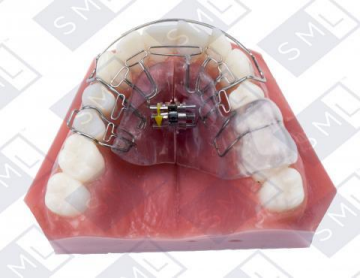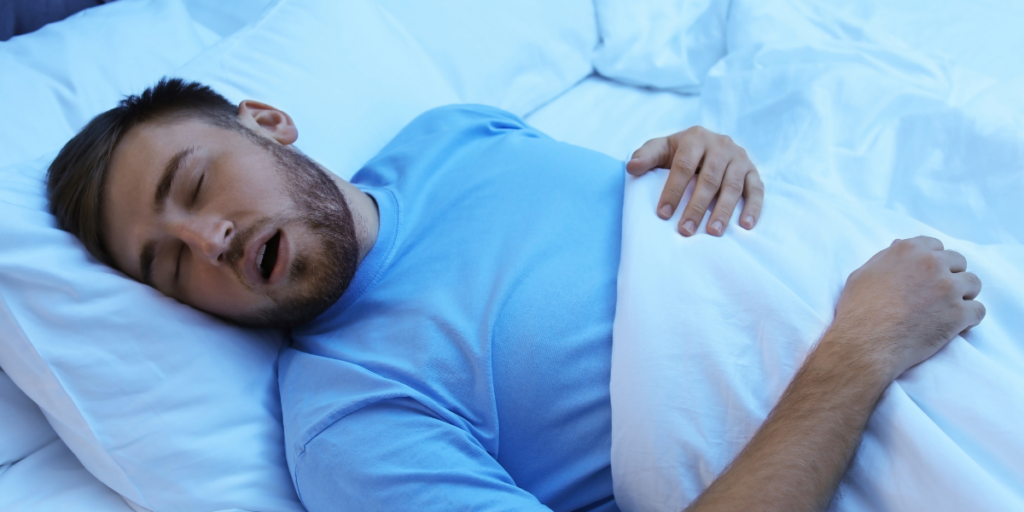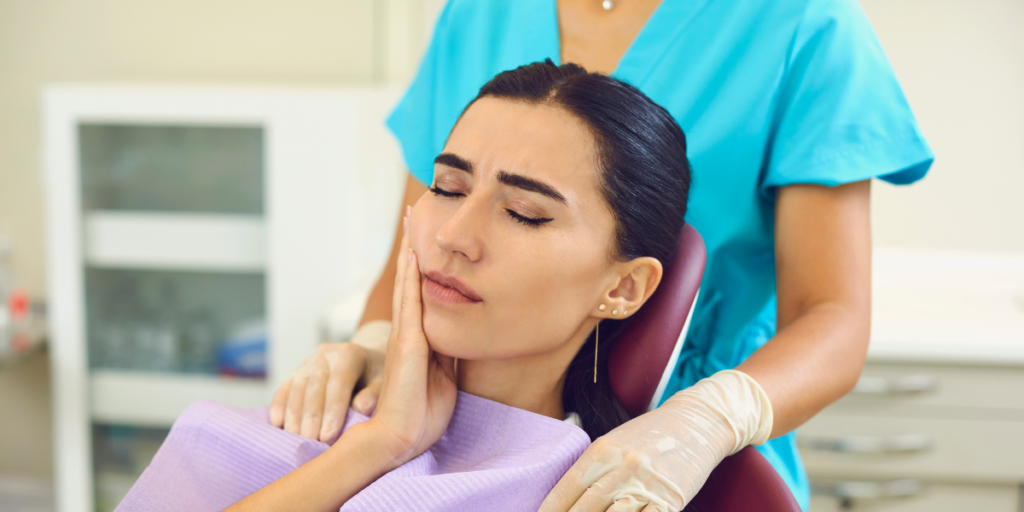
People who cannot tolerate CPAP or need another treatment option may find sleep apnea oral appliances beneficial. These devices function by moving the lower jaw forward, which might increase airflow but may also produce transient jaw stiffness, tooth sensitivity, or an altered bite sensation. Persistent pain, progressive bite changes, or difficulty moving the jaw should not be ignored. A dentist providing sleep apnea and TMJ treatment near me can assess airway effectiveness, appliance fit, jaw comfort, and long-term bite stability.
Quick Takeaways
Why Can a Sleep Apnea Oral Appliance Cause Jaw Pain?
Oral appliances can reduce airway collapse by holding the lower jaw forward during sleep. That position is useful for breathing, but the jaw muscles and joints may need time to adapt. New discomfort deserves attention, especially when it becomes stronger or lasts well into the day.
The appliance holds the lower jaw forward.
The lower jaw is moved slightly forward by a mandibular advancement device. This makes it less likely that the tongue and other tissues around it will block the mouth. Because the jaw remains in this position for several hours, the chewing muscles, ligaments, and temporomandibular joints can feel stiff after waking. Mild soreness may improve as the jaw begins moving, but persistent pain should be reviewed by a provider offering sleep apnea and TMJ treatment near me.
The device may have been advanced too quickly.
Most adjustable appliances are advanced in small stages. Increasing the setting too often can overload tissues that have not yet adapted, leading to muscle tightness, joint tenderness, or headaches. Stop further advancement and contact a sleep apnea dentist NJ rather than trying to push through worsening pain.
The appliance may need further adjustment.
An uneven fit, excessive forward positioning, or concentrated pressure on a few teeth can create discomfort. A dentist can examine retention, tooth contacts and appliance symmetry, then make controlled changes. People searching for oral appliance therapy near me should look for ongoing monitoring instead of a one-time fitting.
Schedule Your Visit with a Trusted Dental Team
Taking the next step toward better oral health starts with a simple conversation. Our experienced team is ready to answer your questions and help you plan your treatment with confidence.
Existing TMJ problems may become more noticeable.
Clenching, grinding, clicking, restricted opening, or a history of jaw pain can reduce appliance tolerance. These concerns do not always rule out oral appliance treatment, but they should shape the design and adjustment schedule. When symptoms continue, TMJ disorder treatment Clifton may be needed alongside airway management. A coordinated plan for sleep apnea and TMJ treatment near me can help distinguish normal adaptation from a joint disorder. A provider experienced in TMJ disorder treatment Clifton can determine whether joint symptoms need separate care.
Is a Temporary Change in My Bite Normal?
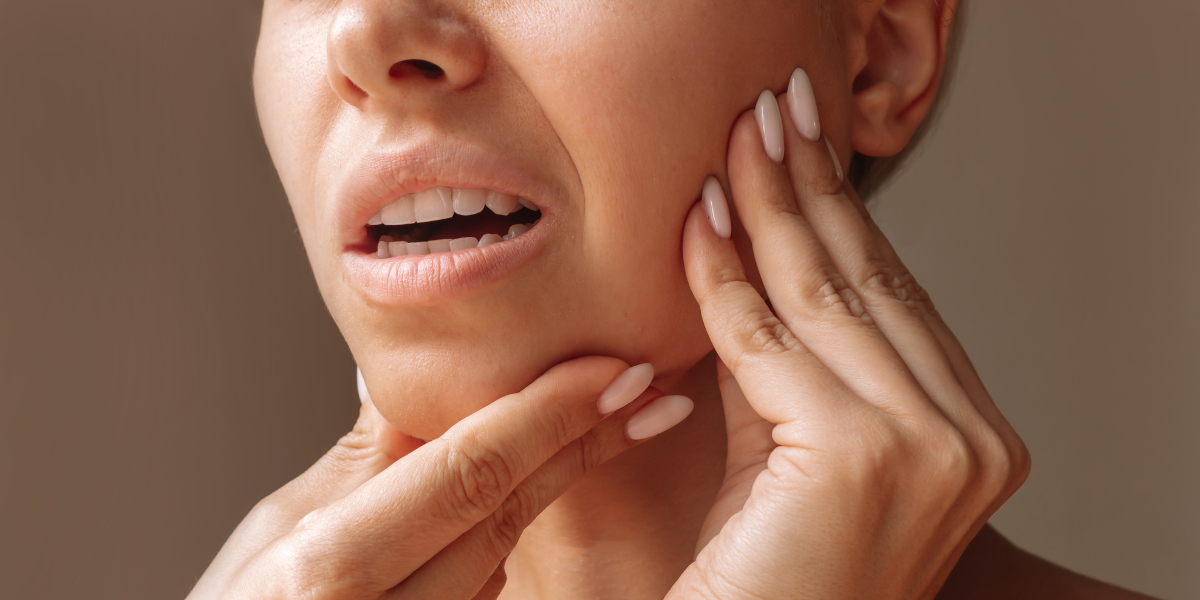
Sometimes a short change in bite during the morning can be caused by a forward position of the lower jaw during the night. What is important is to see if the bite comes back to its normal place after a gentle movement. Changes that remain or get worse should be recorded and evaluated.
Why the teeth may not meet normally in the morning
Once the device is off, the lower jaw might be slightly forward for a brief time. The back teeth may not touch, or chewing may feel different. Oral appliance therapy near me can relieve the bite if it is loose or unstable after some gentle jaw movement and a morning repositioner prescribed by your dentist.
Temporary bite changes versus progressive bite drift
A temporary discrepancy usually improves soon after waking. Progressive bite drift lasts longer, becomes more noticeable, or changes how the teeth meet throughout the day. New spaces, shifting teeth, or altered chewing are reasons to seek dental sleep apnea treatment NJ with regular bite monitoring.
Why baseline dental records matter
Photographs, scans, bite records, and jaw measurements create a reference point before treatment begins. Comparing later records with the baseline helps the dentist identify subtle tooth movement or jaw-position changes early. A sleep apnea dentist NJ can then adjust treatment before the problem becomes harder to manage.
Immediate Steps to Take When Jaw Pain or Bite Changes Begin
Do not ignore new jaw pain or a bite that remains altered. A few careful steps can reduce strain while you arrange a professional review. Home care should remain gentle and should never replace an evaluation when symptoms are worsening.
Stop aggressive appliance adjustments.
Do not increase the forward setting while pain or bite changes are present. Record the current setting and the date symptoms started, then contact the treating provider. Continuing to advance the device may increase pressure on the joints and muscles during sleep apnea treatment in Clifton.
Use a prescribed morning repositioning device.
A morning bite guide or repositioner can help the jaw and teeth move back toward their usual relationship after the appliance is removed. It should be fitted or recommended by the treating dentist. Household objects and generic products can create uneven pressure and should not be used.
Try gentle, pain-free jaw movement.
Slow opening and closing, followed by small side-to-side movements, may reduce stiffness. Stay within a comfortable range and never force the jaw. Stop immediately if movement causes sharp pain, locking, or increased joint symptoms that may require a TMJ specialist in Clifton, NJ.
Use warm or cold therapy appropriately.
A warm compress over sore facial muscles for about ten minutes may encourage relaxation. A wrapped cold pack may feel better for sharp, localized joint pain. Either option may provide temporary relief, but it does not replace TMJ disorder treatment in Clifton when symptoms persist.
Contact the treating dentist or sleep specialist promptly.
The clinician may need to check appliance fit, advancement level, jaw movement and tooth contacts. Bring the appliance, its storage case and any morning repositioner to the visit. Worsening symptoms should not be managed only with home remedies or online advice.
What Can the Dentist Adjust Professionally?
Professional adjustment aims to protect the airway while reducing strain on the teeth, muscles and joints. The correct change depends on the appliance design, the patient’s bite and the severity of symptoms. Small, measured modifications are usually safer than self-adjustment.
Reducing the forward advancement setting
Moving the jaw slightly less forward can reduce pressure on the joints and chewing muscles. The dentist must balance comfort with airway support, so the change may be followed by symptom tracking or sleep testing. Sleep apnea treatment in Clifton often uses gradual titration rather than maximum advancement at the start.
Slowing the adjustment schedule
Some patients need several nights or weeks at one setting before the next change. A slower schedule allows muscles and joints to adapt and gives the dentist time to evaluate comfort. This approach is common in carefully monitored oral appliance therapy near me.
Correcting appliance fit or pressure points
The dentist can check for uneven retention, worn components, distortion, or heavy pressure on specific teeth. Depending on the findings, the device may be modified, repaired, or replaced. Custom adjustable devices used in dental sleep apnea treatment NJ offer control that generic appliances cannot provide.
Providing a custom morning alignment device
A customized repositioner may guide the teeth back toward the recorded baseline bite after waking. The dentist can monitor how quickly the bite returns and update the device after dental work or tooth movement. This step supports both comfort and long-term stability.
When Does Jaw Pain Require a Prompt Dental Evaluation?

Mild stiffness that resolves quickly may be part of adaptation, but several symptoms call for faster care. Delaying an assessment can allow a joint problem, dental issue, or progressive bite change to worsen. The pattern and duration of symptoms matter as much as their intensity.
Symptoms that should not be dismissed
Arrange an evaluation for pain that persists into the day, difficulty opening or closing, locking, restricted movement, painful clicking, loose teeth, gum irritation, or a bite that no longer returns to normal. These findings may indicate that the appliance setting, fit, or underlying TMJ condition needs attention from a TMJ specialist in Clifton, NJ. Persistent symptoms may justify TMJ disorder treatment Clifton before further advancement is attempted. Evaluation by a TMJ specialist Clifton NJ may be appropriate when movement remains limited.
Signs that may require urgent care
Severe facial swelling, fever, trauma, uncontrolled pain, or an inability to close the mouth normally may require urgent or emergency dental care. Do not wait for a routine follow-up when these signs appear. Adults and families should use the most appropriate local emergency service.
Why a combined airway and TMJ assessment may be necessary
Correcting appliance fit alone may not address clenching, muscle dysfunction, or an existing joint disorder. Integrated sleep apnea and TMJ treatment near me considers breathing effectiveness, jaw movement, muscle tenderness, and bite stability together. This reduces the risk of solving one problem while overlooking another.
Schedule Your Visit with a Trusted Dental Team
Taking the next step toward better oral health starts with a simple conversation. Our experienced team is ready to answer your questions and help you plan your treatment with confidence.
How Can the Problem Be Corrected Without Compromising Sleep Apnea Treatment?
Stopping treatment without a replacement plan can allow snoring, fatigue, and breathing interruptions to return. The safer approach is to identify what changed and modify treatment in coordination with the dental and medical team. Comfort and effectiveness should be reviewed together.
Reassessing the appliance and current oral health
New crowns, tooth movement, gum changes, weight changes, jaw problems, or appliance wear can affect fit. The dentist should compare the device with the patient’s current oral condition and sleep symptoms. A provider offering dental sleep apnea treatment NJ can address the appliance without abandoning management of diagnosed sleep apnea.
Coordinating with the patient’s sleep physician
Oral appliance care should remain connected to the formal sleep apnea diagnosis. Significant changes in advancement or device design may justify follow-up sleep testing. The sleep apnea dentist NJ manages the appliance and oral structures, while the medical provider oversees the broader sleep condition.
Exploring alternative designs or treatment options
A different appliance design may reduce joint loading or permit more natural movement. Suitability depends on teeth, restorations, jaw anatomy, gum health, and sleep apnea severity. Decisions should be coordinated so the patient does not stop effective treatment without another safe option.
Could I Replace the Sleep Appliance With a TMJ Night Guard?

A sleep apnea appliance and a night guard are not interchangeable. They may look similar, but they are designed for different clinical goals. Replacing one with the other without guidance can leave sleep apnea untreated or worsen jaw positioning.
The two appliances serve different purposes.
A sleep appliance advances the lower jaw to support the airway. A custom night guard for TMJ may reduce clenching-related tooth wear or distribute biting pressure, but an ordinary guard does not reliably treat obstructive sleep apnea. The correct device depends on the diagnosis and treatment objective. Patients comparing a sleep device with a custom night guard for TMJ should ask how each option changes jaw position and airway support.
Why wearing two devices without guidance can cause problems.
Two separate devices can create excessive bulk, poor retention, or unintended jaw positioning. They may also interfere with each other and change tooth contacts. Combining a sleep device with a custom night guard for TMJ requires professional design and monitoring. A custom night guard for TMJ should never be layered over another appliance unless the dentist has designed the combination.
Schedule Your Visit with a Trusted Dental Team
Taking the next step toward better oral health starts with a simple conversation. Our experienced team is ready to answer your questions and help you plan your treatment with confidence.
When a different appliance design may be considered
The dentist may consider another design when TMJ health, missing teeth, crowns, bridges, implants, or limited jaw movement affect comfort. Preventive and restorative findings influence how the device is supported. Comprehensive evaluation is essential before selecting an alternative. In selected cases, a custom night guard for TMJ may be incorporated into a coordinated design, but only after airway needs are reviewed.
How Can Future Jaw Pain and Bite Changes Be Reduced?
Prevention depends on follow-up, controlled adjustment, and daily care. Oral appliance treatment is an ongoing process rather than a single fitting appointment. Small problems are easier to correct when they are reported early.
Attend scheduled follow-up appointments.
Regular visits allow the dentist to inspect the appliance, bite, jaw movement, teeth, and gums. Patients seeking oral appliance therapy near me should ask whether monitoring and adjustment visits are included. Skipping reviews can allow gradual changes to go unnoticed. Reliable oral appliance therapy near me includes scheduled checks rather than waiting until discomfort becomes severe.
Follow the prescribed advancement schedule.
Change the setting only according to the provider’s instructions. Faster advancement does not always improve treatment and may increase soreness. Report discomfort before moving to the next stage of sleep apnea treatment in Clifton. A clinician providing sleep apnea treatment in Clifton can adjust the pace according to symptoms and airway response.
Use the morning repositioner consistently.
Use the repositioner for the prescribed duration and with the recommended technique. Consistent use may shorten morning bite changes and help maintain the baseline tooth relationship. Bring it to follow-up visits so its fit can also be checked.
Keep the appliance clean and protected.
Clean the device with products approved by the manufacturer or dentist, store it safely, and inspect it for cracks or distortion. Heat, pets and harsh cleaners can damage the appliance and change its fit. Bring it to routine dental visits for inspection.
Report dental treatment or oral-health changes.
Crowns, bridges, implants, bonding, dentures, orthodontic movement, and gum disease can change appliance retention. Tell every dental provider that you use a sleep appliance. Invisalign or other bite-changing care should be coordinated with dental sleep apnea treatment NJ.
Monitor both comfort and sleep-related symptoms.
Track jaw pain, headaches, morning bite changes, snoring, fatigue, and nightly appliance use. A comfortable device is not necessarily effective unless sleep outcomes are also monitored. Reassessment is appropriate when breathing symptoms or jaw symptoms return.
Questions to Ask at Your Oral Appliance Follow-Up

A focused list of questions can help the appointment address both comfort and treatment effectiveness. Bring notes about timing, severity, and changes in your bite. Clear details help the clinician decide whether adjustment, imaging, testing, or referral is appropriate.
Questions About Jaw Pain
- Is the appliance moving my jaw too far forward?
- Should I temporarily stop advancing the device?
- Could clenching, grinding, or a TMJ disorder be contributing to the pain?
- Would a different appliance design reduce joint strain?
- Should I use heat, cold therapy, or specific jaw exercises?
Schedule Your Visit with a Trusted Dental Team
Taking the next step toward better oral health starts with a simple conversation. Our experienced team is ready to answer your questions and help you plan your treatment with confidence.
Questions About Bite Changes
- Is the bite change temporary or becoming permanent?
- Should I use a morning repositioner or custom bite guide?
- Are my teeth showing measurable movement?
- How long should it take for my bite to return to normal each morning?
- How often should my bite be documented and reviewed?
Questions About Ongoing Sleep Apnea Control
- Will reducing the advancement setting affect treatment effectiveness?
- Do I need repeat sleep testing?
- Should my sleep physician be informed?
- What alternatives are available if this appliance cannot be made comfortable?
How We Support Comfortable Sleep Apnea and TMJ Care at Harmony Dental Arts

At Harmony Dental Arts, we look beyond the appliance itself. Our approach considers airway support, jaw comfort, tooth contacts, and long-term oral health together. We aim to help patients use treatment consistently without overlooking progressive discomfort.
We evaluate the appliance alone.
We assess the bite, jaw joints, facial muscles, teeth, gums and existing restorations. This broader review supports patients searching for sleep apnea and TMJ treatment near me in Clifton and nearby communities. Our goal is to support breathing at night while protecting daytime comfort.
We review jaw pain and bite changes carefully.
We ask when symptoms began, how long they last, and whether the bite returns to normal after waking. We may evaluate appliance fit, advancement settings, jaw movement and tooth contacts. Patients should bring both the oral appliance and morning repositioner.
We personalize and monitor oral appliance therapy.
We tailor treatment around oral health, airway needs, and comfort, then monitor changes over time. When appropriate, we recommend controlled professional adjustments. Our care may include sleep apnea treatment in Clifton, TMJ disorder treatment Clifton and dental sleep apnea treatment NJ.
We coordinate sleep care with comprehensive dentistry.
Routine examinations, gum care and restorative treatment can reveal changes that affect appliance fit. Crowns, bridges, dentures, bonding, veneers and Invisalign may alter tooth contacts or retention. Coordinating these services helps protect the treatment plan.
We help patients understand their next step.
Based on the findings, we may recommend appliance adjustment, slower advancement, a morning alignment device or further evaluation. Modern dental technology helps us compare bite and fit over time. Our Clifton practice supports adults and families who need coordinated dental, sleep apnea and TMJ care. Patients searching for a custom night guard for TMJ should receive a diagnosis before choosing a device.
Conclusion
Mild jaw stiffness or a brief morning bite change can occur while adapting to an oral appliance, but symptoms should improve rather than progress. Stop aggressive adjustments, use only prescribed repositioning techniques, keep movements gentle, and contact the treating provider when pain persists. Do not trim the appliance yourself or replace prescribed sleep apnea care with a standard guard. Clifton-area patients should arrange an evaluation when the device becomes painful, no longer fits properly, or begins changing the bite.
Living with jaw pain or bite changes from your sleep apnea appliance does not have to become your new normal. Contact Harmony Dental Arts to receive a personalized evaluation and find a comfortable treatment approach that supports healthy breathing, jaw function, and long-term oral health.