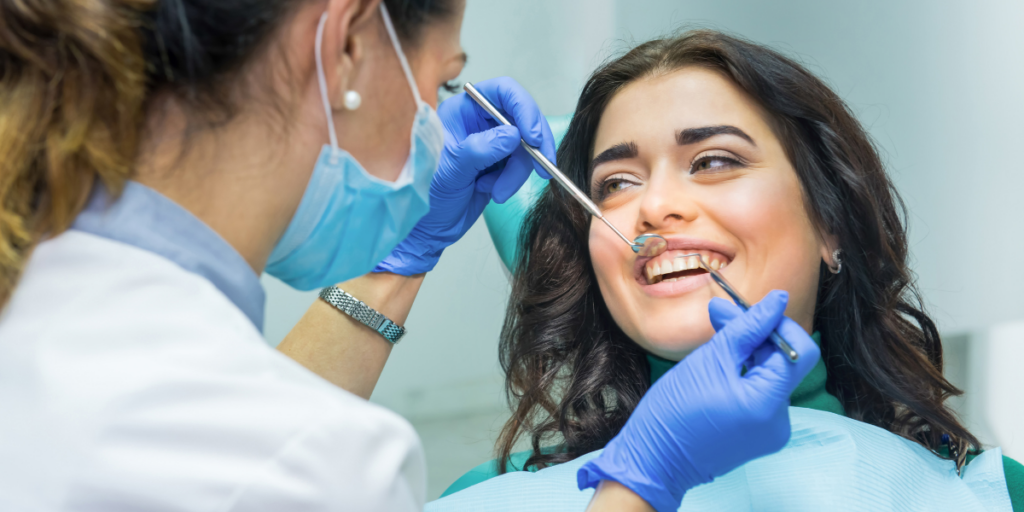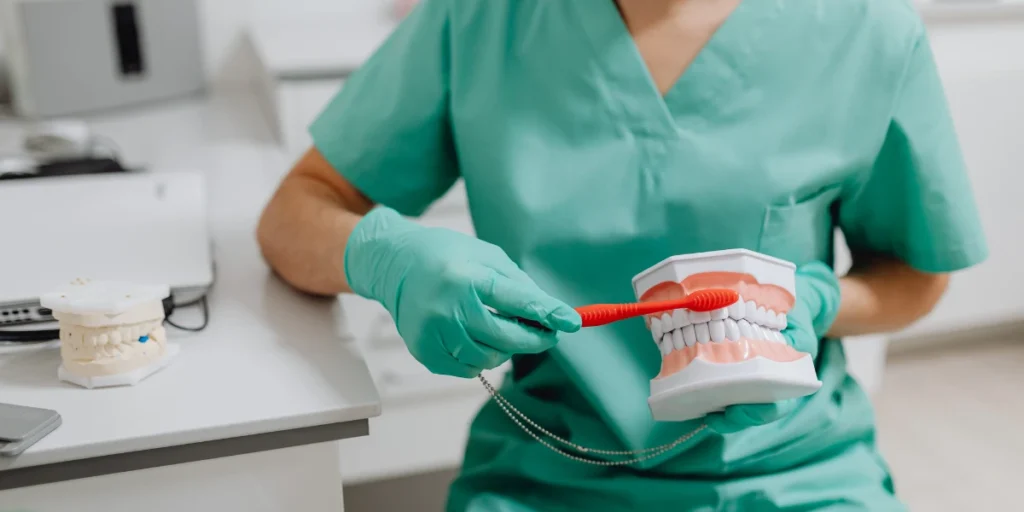
Is sitting in the dentist’s chair twice a year a strict rule or simply a useful starting point? Six-month visits are common, but the right timing depends on your oral health, past dental problems, daily habits, medications, and risk factors. If you are planning a dental exam in Clifton, the useful question is not simply, “Has six months passed?” A better question is, “How quickly can my oral health change, and what should my dentist be watching?” Someone with healthy gums and little cavity history may need a different recall schedule from someone managing periodontal disease, dry mouth, frequent decay, or several restorations.
How Often Should You Schedule a Dental Exam in Clifton?

A six-month interval creates regular checkpoints before small changes have much time to progress. That does not mean a problem suddenly appears after month six. Preventive dentistry works best when your dentist can compare findings over time and respond when something begins to change. During a routine dental exam Clifton patients can have their teeth, gums, bite, and oral tissues evaluated. The dentist can compare current findings with previous visits and decide whether other diagnostic steps are needed. Patients searching “dental wellness Clifton” often see the same twice-a-year advice. The missing detail is risk. A patient with stable gums, strong home care, and no recent decay may not need the same schedule as someone whose gums bleed easily or whose mouth stays dry because of medication.
Plaque, Tartar, and Early Interception
Plaque forms continuously on teeth. Brushing and cleaning between the teeth help remove it, but plaque that remains can harden into tartar. Once tartar forms, routine brushing cannot remove it effectively, and the rough surface can make plaque control more difficult. This is one reason a dental exam every 6 months often pairs well with preventive care. The visit gives the dental team a chance to identify buildup, inspect areas that are difficult to see at home, and check for early signs of decay or gum inflammation.
Regular visits can also reveal problems that are not painful yet. A small area of enamel breakdown, a deeper gum pocket, a cracked filling, or new sensitivity around one tooth may be easier to address when identified early. Pain matters, but it should not be the only reason to have your mouth checked.
Schedule Your Visit with a Trusted Dental Team
Taking the next step toward better oral health starts with a simple conversation. Our experienced team is ready to answer your questions and help you plan your treatment with confidence.
Who May Need a Dental Checkup in Clifton, NJ More Often?
Some patients benefit from visits closer together than twice a year. The decision is usually based on disease activity and risk. A history of periodontal disease, repeated cavities, tobacco use, dry mouth, certain medications, diabetes, pregnancy-related gum changes, orthodontic appliances, or difficulty cleaning specific areas can influence the recommended schedule.
A more frequent dental checkup in Clifton, NJ may help the dental team monitor changes before they become harder to manage. For example, dry mouth can reduce the protective effect of saliva, while a history of gum disease may call for closer periodontal monitoring. This is also why a search for dentist checkup near me should lead to an individualized conversation rather than an automatic appointment pattern. Your dentist may recommend three-, four-, six-, or twelve-month intervals depending on what is being monitored and how stable your oral health has been.
Signs Your Risk Level May Have Changed
A schedule that worked for years may need to change. New medications can cause dry mouth. A stressful period can affect home-care habits. A new health condition, pregnancy, smoking or vaping, a diet change, or difficulty cleaning around dental work can alter your risk.
Persistent bleeding when brushing, recurring bad breath, increased sensitivity, food trapping, a rough or chipped tooth, gum recession, or discomfort when chewing are reasons to contact your dental office rather than waiting for the next planned visit. Patients following a routine dental exam Clifton schedule may also need a temporary change after treatment. Closer monitoring can be useful while an area heals or while the dentist checks whether a preventive plan is working.
Is Once a Year Enough for Oral Exams in Clifton?
For some adults with very low dental disease risk, a yearly appointment may be reasonable to discuss with their dentist. That choice should be based on a consistent pattern of good oral health, not simply the absence of pain. A comfortable mouth can still have early decay, gum inflammation, worn restorations, or other changes that are hard to detect at home.
A lower-risk patient often has no recent cavity history, healthy gums, stable dental work, strong brushing and interdental cleaning habits, limited frequent sugar exposure, and no major condition that increases oral disease risk. Even then, the schedule should follow professional guidance after the dentist reviews the patient’s history and current findings. People searching “dental wellness Clifton” may assume that excellent brushing automatically makes yearly visits enough. Home care matters, but it cannot replace a professional examination. You cannot easily evaluate gum pocket depths, inspect every tooth surface, or determine whether a restoration is beginning to fail.
Schedule Your Visit with a Trusted Dental Team
Taking the next step toward better oral health starts with a simple conversation. Our experienced team is ready to answer your questions and help you plan your treatment with confidence.
When a Year Is Too Long to Wait
A yearly schedule stops making sense when symptoms or risk factors appear between visits. If you develop persistent sensitivity, swelling, a broken tooth, bleeding gums, a change in your bite, a sore that does not heal, or pain with chewing, arrange an evaluation instead of waiting for the annual appointment. The same applies if you find yourself searching for a dentist checkup near me because something feels different. That search is a good reason to get the change assessed rather than trying to fit it into a routine timeline.
A dental exam every 6 months may also become the better choice after a cavity, gum problem, new restoration, or health change. Recall schedules should be flexible because oral health is not static.
What Happens During a Comprehensive Dental Exam?
A comprehensive dental exam in Clifton is designed to create a clear picture of your current oral health and identify changes that may need attention. The exact steps can vary, but the visit generally combines visual inspection, gum assessment, review of existing dental work, bite evaluation, and screening of the mouth’s soft tissues.
Dental X-rays may be recommended when they are clinically useful rather than automatically at every visit. The dentist considers your history, examination findings, symptoms, and diagnostic needs before deciding whether imaging would add useful information. Current ADA guidance also recommends selecting dental imaging according to individual clinical needs.
Key Parts of Preventive Care
During the visit, the dentist may inspect tooth surfaces for decay, cracks, wear, or changes around fillings and crowns. The gums can be checked for inflammation, recession, bleeding, and periodontal pocket depth. Oral tissues such as the tongue, cheeks, and palate may also be examined for unusual changes.
Oral exams in Clifton are also a good time to discuss symptoms that may seem minor, including jaw soreness in the morning, clenching, dry mouth, sensitivity, or food constantly catching in one area. Those observations can add useful context to clinical findings. For anyone searching “dental wellness Clifton,” preventive care should go beyond one question: “Do I have a cavity?” Preventive care is also about trends. Gradual changes in gum measurements, enamel wear, or the condition of a restoration can matter even when nothing hurts.
Common Questions About Checkup Frequency
Patients often want one simple number, but the best answer depends on risk. These common questions can help clarify when a routine schedule works and when it makes sense to call sooner.
Schedule Your Visit with a Trusted Dental Team
Taking the next step toward better oral health starts with a simple conversation. Our experienced team is ready to answer your questions and help you plan your treatment with confidence.
Does Insurance Cover Two Preventive Visits a Year?
Many dental plans include preventive benefits, but coverage rules vary by insurer, employer plan, procedure, and time period. Some plans use calendar-year limits, while others apply frequency rules. Before assuming a dental checkup in Clifton, NJ is covered at a specific interval, review your plan details or ask the dental office to help you understand your benefits. Insurance coverage and clinical need are separate considerations. Your dentist’s recommendation should reflect your oral health, while your benefits determine what the plan pays. If the recommended schedule and coverage differ, ask what the visit is intended to monitor.
Can I Skip an Exam if Nothing Hurts?
No symptoms does not always mean no dental disease. Early cavities and gum inflammation can develop quietly, and worn or cracked dental work may not cause immediate discomfort. Preventive exams are useful because they can reveal changes before pain becomes the reason you seek care.
Do Children and Adults Need the Same Schedule?
Not necessarily. Children’s mouths change as teeth erupt and the bite develops, while adults may have restorations, gum concerns, dry mouth, or wear patterns that affect preventive needs. Age matters, but current findings and risk factors matter more. For that reason, a parent’s schedule should not automatically be copied for a child, and one adult’s schedule should not be copied for another. The most useful plan is based on what the dentist is actually monitoring.
How Harmony Dental Arts Personalizes Your Preventive Schedule
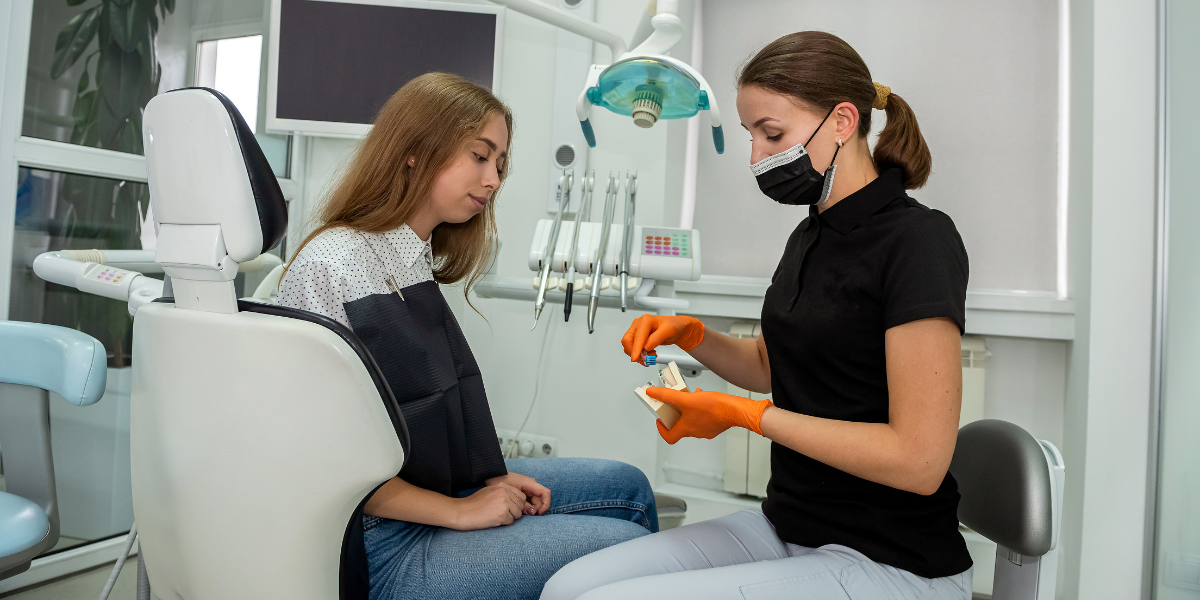
At Harmony Dental Arts, we evaluate your current condition, review your dental and health history, and recommend a schedule based on what needs monitoring. This personalized approach also shows up in the practice’s preventive care information for Clifton patients. That may mean keeping a six-month rhythm, shortening the interval for closer observation, or discussing whether a longer interval fits a consistently low-risk patient. The recommendation should make sense to you, including what the dental team is watching and why the timing matters.
Patients who prefer a routine dental exam Clifton Plan can also use each visit to ask practical questions about home care. If one area keeps collecting plaque, a change in technique or cleaning tools may help. If your gums are improving, the dental team can explain what appears to be working. Clear communication also matters when planning oral exams in Clifton. Understanding why one person may need three or four visits in a year while another may be stable with fewer makes the schedule easier to follow and less arbitrary.
Conclusion
Six months is a useful starting point, but it should not replace clinical judgment. Cavity history, gum health, home-care habits, medications, medical conditions, restorations, and current symptoms all help determine how often you should be examined. If it has been a while since your last dental exam in Clifton, or your oral health has changed since your previous visit, a current evaluation can establish a better baseline. From there, the team can recommend a recall interval that fits your needs. Contact Harmony Dental Arts to schedule an evaluation and discuss the right preventive schedule for you. A thoughtful plan can help you stay ahead of developing problems without relying on a generic timeline.